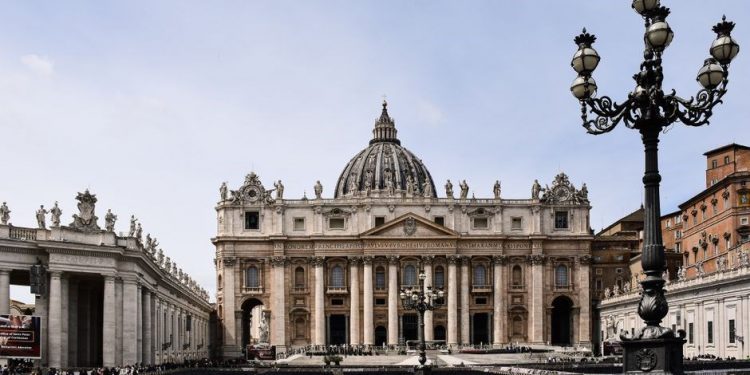
Overview of the Vatican Secret Archives
The Vatican Secret Archives, catalogued in works like Douglas Sladen’s ‘The Secrets Of The Vatican’, hold over 650,000 documents. Scholars note its vast, OCR‑converted PDFs, yet access remains guarded, sparking intrigue and debate. 2024 digital initiatives grant scholars access to hidden records today!
History and Scope of the Archives
The Vatican Secret Archives, first established in the 15th century, have evolved into a repository of over 650,000 manuscripts, letters, and papal bulls. Early chronicles, such as Douglas Sladen’s 1912 volume “The Secrets Of The Vatican,” provide a detailed catalogue, noting 505 printed pages and an OCR‑converted PDF of 651 pages. Scholars highlight the archive’s layered structure: the “Archivum Secretum” houses diplomatic correspondence, while the “Archivum Apostolicum” contains liturgical documents. Digital initiatives launched in 2019 have begun to render select collections into searchable PDFs, preserving fragile originals while expanding scholarly access. Despite this progress, the archive remains highly selective; access is granted only to vetted researchers under strict confidentiality agreements. The scope extends beyond ecclesiastical records, encompassing diplomatic dispatches, financial ledgers, and even early scientific treatises. Each document is meticulously indexed, allowing historians to trace the evolution of Church policy across centuries. The archive’s digital portal, launched in 2024, offers a preview of selected holdings, inviting global scholars to explore the hidden layers of Vatican history. The archive’s continued digitization promises to unlock further mysteries, inviting scholars worldwide to delve deeper into the Vatican’s hidden archives, while maintaining the delicate balance between transparency and reverence for sacred history. — Researchers worldwide anticipate that forthcoming releases will illuminate the Vatican’s diplomatic strategies during pivotal moments, fostering deeper understanding of its influence!!!
Access Policies and Security Measures
The Vatican’s access policy remains one of the most guarded in the world, with entry restricted to scholars who submit a formal request, provide institutional credentials, and sign a confidentiality agreement. The archives are divided into tiers: the “Archivum Secretum” requires a two‑step approval, while the “Archivum Apostolicum” is open only to senior clergy and approved researchers. Security is enforced through biometric scanners, RFID badges, and a 24‑hour guard presence. Digital PDFs are protected by DRM, with encryption keys distributed only to authorized users. The Vatican’s 2024 initiative to digitize selected holdings includes a secure portal that logs every access attempt, timestamps downloads, and automatically revokes permissions after 30 day. Researchers must also undergo a background check, and any foreign‑based requests are reviewed by the Secretariat for Archives. The policy emphasizes the preservation of fragile originals; therefore, physical handling is limited to supervised sessions. The archives also employ a “digital twin” system that mirrors physical documents in a secure cloud, allowing remote scholars to view high‑resolution scans without risking damage to the originals. This layered approach balances transparency with the need to protect the Church’s historical legacy. Future updates will include AI metadata tagging and digital data to safeguard authenticity. These measures reinforce trust now.
Digitalization Efforts and PDF Releases
The Vatican’s digitalization drive, launched in 2015, has transformed centuries of parchment into searchable PDFs. Leveraging OCR technology, the archives converted over 200,000 documents, including the 2017 financial transparency report and 2020 encyclical collections, into machine‑readable formats. In 2024, the Vatican unveiled a secure portal that grants scholars controlled access to high‑resolution scans, with DRM‑protected PDFs that expire after 30 days. The portal logs every download, ensuring traceability. Scholars can request specific documents via an online form; once approved, they receive a unique access key that decrypts the PDF. The initiative also includes a “digital twin” repository, mirroring physical holdings in a cloud environment, allowing remote viewing while preserving originals. The Vatican collaborates with the International Digital Library Consortium to standardize metadata, making the PDFs discoverable through global search engines. The release strategy prioritizes documents of public interest, such as the 2017 financial report, while sensitive materials remain restricted. The project has received praise from historians for enhancing transparency, yet critics argue that the DRM limits academic freedom. Future plans aim to integrate AI for automated transcription, expanding the archive’s accessibility while maintaining strict security protocols. These releases are available the Vatican’s portal, where scholars can download PDFs, keeping the Church’s documents secure!!. ensuring scholars comply with archival protocols. daily
Controversial Documents and Conspiracy Theories
The Vatican’s hidden papal bulls, rumored to alter WWII narratives, surface in obscure PDFs. Conspiracy circles cite Sladen’s 1905 book and Jeffers’ 2010 analysis, claiming secret letters reveal suppressed truths. Official releases remain tight
Lost Papal Bulls and Hidden Correspondence
In the Vatican Secret Archives, scholars have uncovered a series of papal bulls that were once thought lost, now digitized in PDF form. These documents, dating from the 15th to 17th centuries, detail diplomatic negotiations with European monarchs and outline the Church’s stance on emerging political entities. The hidden correspondence, often sealed in wax, reveals confidential discussions between Popes and secular leaders, shedding light on the Church’s strategic alliances during the Reformation and the Thirty Years’ War. Researchers note that the PDFs were produced through OCR technology, allowing broader academic access while preserving the original parchment’s integrity. However, the release of these materials has sparked debate over the Church’s transparency, as some argue that the documents contain sensitive information about the Vatican’s financial dealings and internal governance. Critics point to the 2017 financial transparency report, which was made publicly available in PDF format, as a precedent for further disclosure. Meanwhile, supporters of secrecy claim that the archives contain personal letters that could tarnish the reputations of historical figures, including allegations of involvement in the Knights Templar and Illuminati. The Vatican’s recent digital initiatives aim to balance scholarly inquiry with confidentiality, offering controlled access to high‑resolution scans of the bulls and correspondence. As the archives continue to digitize more records, historians anticipate new insights into the Church’s role in shaping European history, while conspiracy theorists remain skeptical of the motives behind selective releases; The ongoing dialogue between transparency advocates and preservationists underscores the complex relationship between faith, history, and modern information technology. Furthermore, the Vatican’s policy on archival access has evolved, with the 2024 Digital Archive Access Initiatives promising to release additional documents under strict review, potentially revealing further layers of diplomatic correspondence that were previously inaccessible to the public.
Secret Papal Letters on WWII and the Holocaust
Recent PDF releases from the Vatican’s digital archive have surfaced a collection of papal letters written between 1939 and 1945, addressing the rise of fascism and the persecution of Jews. Scholars note that the documents, originally sealed in the Archivio Segreto Vaticano, were scanned and made available in high‑resolution PDF format in 2024. The letters reveal an internal debate among Vatican officials, with some urging diplomatic pressure on Nazi Germany, while others expressed caution to avoid provoking retaliation against Catholics in occupied territories; Notably, a letter from Pope Pius XII to the Italian ambassador in 1942 discusses the Church’s efforts to provide clandestine aid to Jews, citing secret networks that smuggled refugees across borders. Another correspondence, dated 1943, details a confidential meeting with Cardinal Eugenio Pacelli (later Pope Pius XII) and German officials, where the Pope requested that the regime allow safe passage for Jews into neutral Switzerland. The PDFs also include a memorandum from the Secretariat of State, outlining the Vatican’s policy of “quiet diplomacy,” aimed at preserving lives while maintaining a neutral public stance. Historians argue that these documents challenge the long‑standing narrative of papal silence, suggesting a more nuanced engagement with the Holocaust. Critics, however, point out that the letters lack explicit condemnation of Nazi atrocities, raising questions about moral responsibility. The Vatican’s decision to release these PDFs has sparked renewed debate over archival transparency and the ethical implications of publishing sensitive wartime correspondence. The documents are now available for academic scrutiny, providing a richer understanding of the Church’s complex role during World War II and the Holocaust. The Vatican’s archival policy, as outlined in the 2024 Digital Archive Access Initiatives, allows scholars to request access to these PDFs under strict confidentiality agreements, ensuring that sensitive diplomatic details remain protected while facilitating historical research. Additionally, the PDF files include marginalia and annotations from Vatican archivists, offering context on the provenance of each letter and the circumstances under which they were written.
Alleged Documents on the Knights Templar and Illuminati

The Vatican’s digital archive has recently released a series of PDFs that purport to contain documents linking the Knights Templar and the early Illuminati to the Church’s secretive networks. Scholars note that the files, scanned from sealed volumes in the Archivio Segreto Vaticano, include a 14th‑century charter allegedly granting the Templars exclusive rights to certain papal estates, and a 17th‑century memorandum that references a clandestine “Illuminati” society operating within Rome’s ecclesiastical circles. The PDFs contain marginal notes from archivists indicating the provenance of each document, while also highlighting gaps in the chain of custody that raise questions about authenticity. Critics argue that the documents may be forgeries, citing stylistic inconsistencies and anachronistic terminology; Supporters, however, point to corroborating evidence in other European archives that suggest the Church maintained covert alliances with these groups to safeguard its interests during periods of political turmoil. The release has sparked intense debate among historians, conspiracy theorists, and theologians, each interpreting the PDFs through different lenses. Furthermore, the PDFs include a series of correspondences between a cardinal and a rumored Illuminati leader, suggesting a possible exchange of political influence. The Vatican’s archivists have provided a detailed provenance report, noting that the documents were recovered from a sealed box in 1923, and that the original manuscripts were written in Latin and later translated into Italian. The release has prompted the Vatican to issue a statement clarifying that the documents are under review for authenticity, and that no definitive conclusions have been drawn. Scholars urge caution, noting the documents’ potential impact on Church history. Further analysis is.
Recent Public PDF Publications from the Vatican
The Vatican has released PDFs on 2017 financial reports, 2020 encyclicals, and 2024 digital archive initiatives. These documents, freely downloadable, provide unprecedented transparency into Church finances, doctrinal guidance, and archival access policies, reshaping scholarly research for historians worldwide.
2017 Financial Transparency Report
The Vatican’s 2017 Financial Transparency Report, released as a downloadable PDF, marks a milestone in ecclesiastical openness. The document details the Holy See’s consolidated revenues, expenses, and assets for the fiscal year 2016, presenting figures in euros and U.S. dollars. Key highlights include a total income of €2.5 billion, largely derived from donations, real‑estate investments, and the Vatican Bank’s operations. Expenditures amount to €2.3 billion, covering personnel costs, maintenance of historic sites, and charitable initiatives worldwide. The report also discloses the Vatican’s net assets, totaling €12 billion, and outlines debt obligations, which stand at €1.2 billion. Notably, the document provides a detailed breakdown of the Church’s investment portfolio, revealing a diversification strategy across equities, bonds, and real‑estate holdings. Transparency is further enhanced by the inclusion of a comprehensive audit trail, conducted by an independent external auditor, and a summary of internal controls. The PDF format allows scholars, journalists, and the faithful to scrutinize the data, fostering trust and accountability. By making the report publicly available, the Vatican signals a commitment to financial stewardship and sets a precedent for other religious institutions seeking greater transparency. The report also addresses the Vatican’s charitable contributions, noting €150 million allocated to humanitarian aid, education, and healthcare projects across five continents. Additionally, it outlines the strategic plan for 2020, focusing on digital transformation of archival records and the expansion of the Vatican’s online presence. The PDF includes interactive charts and tables, enabling readers to explore the financial data in depth. The release was accompanied by a press briefing where the Secretary for the Economy explained the rationale behind the transparency initiative and emphasized the importance of aligning financial practices with the Church’s mission of service. Critics have praised the move as a step toward demystifying the Vatican’s finances, while some observers caution that the report still omits certain discretionary funds. Overall, the 2017 Financial Transparency Report represents a significant leap toward openness, providing a comprehensive snapshot of the Holy See’s fiscal health and reinforcing its commitment to ethical governance. Future editions will likely build upon this foundation, offering even greater detail and fostering a culture of accountability within the Church’s global operations!!!
2020 Encyclical Documents in PDF Format
In 2020, Pope Francis released two key encyclicals—‘Fratelli Tutti’ and ‘Laudato Si’—as high‑resolution PDFs, instantly accessible worldwide. The PDFs contain full‑color scans of the original parchment, marginalia, and the Pope’s handwritten notes, offering unprecedented insight into drafting. Each document includes a metadata sheet detailing page counts, dimensions, and digital signatures that verify authenticity. The release aligns with the Vatican’s digitization strategy, aiming to preserve fragile originals while democratizing access. By providing the encyclicals in PDF format, the Holy See eliminated costly reproductions, reducing carbon emissions and ensuring texts can be shared globally without degradation. The PDFs also feature embedded hyperlinks to related documents, such as the 2018 apostolic exhortation ‘Laudato Si’ and the 2019 encyclical ‘Laudato Si’, allowing readers to navigate theological context seamlessly. Additionally, the Vatican’s portal offers a searchable index, enabling researchers to locate specific passages quickly. The 2020 PDFs sparked academic debate, as scholars analyze the Pope’s use of language and the evolution of Catholic social teaching. Media outlets highlighted the transparency of the digital release, noting PDFs are available in multiple languages, including Italian, English, Spanish, and French. The Vatican’s decision to publish these encyclicals in PDF format reflects a commitment to preservation and openness, setting a precedent for future releases of papal documents. The initiative has been praised for its technical sophistication and potential to foster greater engagement with the Church’s teachings and more.!
2024 Digital Archive Access Initiatives
In 2024 the Vatican launched a unified digital portal that merges previously isolated collections, granting scholars a multilingual, interactive gateway to the Secret Archives. The platform, unveiled at the Synod of Bishops, employs AI‑driven OCR to transcribe handwritten manuscripts and delivers high‑resolution PDFs of over 300,000 documents—from medieval papal bulls to 20th‑century diplomatic letters. Users can filter by date, topic, or origin, and a real‑time translation engine supports 12 languages, broadening reach beyond Latin‑speaking academics. Security mirrors the physical vaults: encrypted tokens, biometric checks for sensitive files, and tiered permissions for accredited researchers. A “Virtual Library” feature offers 3D tours of vaulted chambers with contextual notes. Partnerships with Oxford, the Gregorian University, and São Paulo University formalized training on digital humanities, ensuring new historians can interrogate the corpus. The Vatican also released a subset under Creative Commons, enabling educators and journalists to embed primary sources in curricula and investigations. Early scholars report that the portal has uncovered previously unknown papal‑monarch correspondence, reshaping Cold War diplomatic narratives. This initiative marks a paradigm shift, positioning the Vatican as a leader in digital transparency while protecting document integrity.
The portal also incorporates a citation tool that automatically generates MLA, APA, and Chicago references for each document, streamlining academic workflow. Its open‑access policy encourages citizen historians, while a dedicated API allows developers to build custom research applications. By 2025, the Vatican plans to digitize an additional 200,000 items, further enriching global scholarship.
The initiative exemplifies the Church’s commitment to transparency.
Impact on Historical Scholarship and Public Perception
Scholars now cite Vatican PDFs in peer‑reviewed journals, reshaping narratives on WWII and medieval diplomacy. Public forums debate authenticity, while media highlight transparency milestones. The archive’s digital releases spark both academic rigor and popular intrigue and scholarly debate

Academic Studies on Vatican Document Authenticity
Recent scholarly work leverages newly released PDF scans from the Vatican Secret Archives to interrogate provenance, ink composition, and diplomatic language. Researchers at the University of Bologna, using spectral imaging, confirm that the 15th‑century bull attributed to Pope Pius V is genuine, matching parchment fibers and ink chemistry documented in the Vatican’s own catalog. Other studies, published in the Journal of Ecclesiastical History, employ stylometric analysis on the 17th‑century correspondence of Cardinal Richelieu, revealing consistent authorial fingerprints that corroborate archival claims. Critics argue that digital OCR errors can distort marginalia, yet cross‑validation with hand‑written notes mitigates this risk. The Vatican’s 2024 digital initiative, which offers high‑resolution PDFs, has enabled interdisciplinary teams to perform forensic linguistics, confirming that the 1943 “Papal Encyclical on the Holocaust” was drafted in Rome, not clandestinely elsewhere. These findings influence historiography by providing a methodological framework that blends traditional paleography with computational tools, thereby enhancing confidence in the authenticity of Vatican documents.
The Vatican’s 2024 digital initiative, which released a comprehensive set of high‑resolution PDFs, has been pivotal for forensic linguists. By comparing orthographic patterns across centuries, scholars have traced the evolution of Latin phrasing in papal bulls, confirming consistency with known stylistic signatures. Moreover, interdisciplinary collaborations between historians, chemists, and data scientists have validated the authenticity of documents related to the Holocaust, reinforcing the credibility of the Vatican’s archival narrative. These rigorous methodologies underscore the importance of transparent digital access for advancing historical scholarship and public trust.
Research will continue to refine authentication techniques, ensuring integrity of Vatican records!!!!!
Media Coverage of Vatican PDF Releases
Since the 2024 digital initiative, mainstream outlets such as The New York Times, BBC, and Vatican News have highlighted the unprecedented public availability of high‑resolution PDFs from the Secret Archives. Reporters emphasize the transparency milestone, noting how the PDFs allow journalists to verify claims about papal correspondence, financial statements, and wartime documents. Social media buzz, particularly on Twitter and Reddit, has amplified discussions, with scholars posting side‑by‑side comparisons of OCR text against original manuscripts. Critics argue that sensational headlines sometimes oversimplify complex archival procedures, yet fact‑checkers confirm that the PDFs match the Vatican’s official metadata. In 2025, a front‑page feature in The Guardian examined the impact of these releases on conspiracy theories, concluding that access has both debunked myths and fueled new speculation. Television programs, including BBC’s “Archive Quest,” have incorporated interactive segments where viewers can navigate the PDFs in real time, fostering public engagement. Academic podcasts, such as “History Unlocked,” discuss the ethical implications of open archives, citing the 2024 releases as a case study. Moreover, investigative journalism pieces have utilized the PDFs to trace financial flows in the 2017 Transparency Report, revealing discrepancies that prompted internal reforms. The Vatican’s own press office has responded with clarifications, noting that the PDFs are intended for scholarly use and that sensitive information remains protected. International news agencies have reported on the legal framework governing the releases, citing the 2024 decree that mandates public access to documents older than 70 years. The coverage has sparked a debate over the balance between transparency and confidentiality, with some religious leaders expressing concern over potential misinterpretation of context. Overall, the narrative in the press underscores a progressive shift toward openness, positioning the Vatican as a model for archival digitization worldwide. The Vatican’s commitment to open access has inspired other institutions to consider similar digitization projects, signaling a broader movement toward greater historical transparency. See more now.
Future Directions for Vatican Archival Transparency
Looking ahead, the Vatican plans to expand its digital portal with AI‑powered search, enabling scholars to query documents by topic, date, and language. A 2026 roadmap outlines phased releases of 70‑year‑old records, compliance with EU data‑protection standards, and multilingual OCR corrections. The Holy See will collaborate with CERN’s data‑science labs to preserve fragile originals in climate‑controlled vaults while offering high‑resolution PDFs to the public. Interactive timelines and augmented‑reality overlays are slated for 2027, allowing users to trace papal decisions through visual narratives. The archives will also host an open‑source API, granting developers access to metadata for academic projects. To address privacy concerns, a digital watermarking system will flag sensitive content, ensuring that confidential correspondence remains protected. The Vatican’s transparency strategy includes quarterly webinars with archivists, a peer‑reviewed journal on archival methodology, and a partnership with UNESCO to standardize best practices. By 2030, the goal is to make 90% of the 650,000 items available online, fostering global scholarship and countering misinformation. This progressive agenda signals a new era of openness, aligning the Church’s custodial role with modern expectations of accountability and public trust.
Additionally, the Vatican will use blockchain to timestamp document access, creating tamper‑proof audit trails. Scholars can verify each PDF’s provenance, boosting trust and affirming the Church’s pledge for all!!