Gevi Espresso Machine Manual: A Comprehensive Guide
Navigating this manual unlocks the full potential of your Gevi machine! Discover detailed instructions, troubleshooting, and advanced features for consistently exceptional espresso,
leveraging Adobe’s intelligent technology for a unique experience.
Understanding Your Gevi Espresso Machine
Welcome to the world of home espresso! Your Gevi machine is designed for ease of use and consistently delicious results. This section provides a foundational understanding of its capabilities. Like Photoshop’s tailored editing, your Gevi adapts to your preferences. It’s part of a crowded coffee gadget market, but aims for simplicity.
The machine utilizes pressure to extract rich, flavorful espresso from finely-ground coffee beans. Understanding the interplay between grind size, tamping pressure, and water temperature is key to achieving optimal extraction. While not a free download like some older software versions, the investment delivers quality. Familiarize yourself with the machine’s components and control panel – detailed in subsequent sections – to unlock its full potential. Consistent cleaning, as outlined later, ensures longevity and performance.
Unboxing and Initial Setup
Carefully unpack your Gevi espresso machine and verify all components are present. Refer to the component identification section for a complete list. Before first use, remove all packaging materials and protective films. Wipe down the exterior with a damp cloth.
Thoroughly rinse the water reservoir, portafilter, and filters with clean water. Avoid using abrasive cleaners. Place the machine on a stable, level surface near a grounded electrical outlet. Fill the water reservoir with fresh, filtered water. Like installing Creative Suite 6 apps, ensure proper connections. Perform an initial flush by running water through the machine without coffee grounds – this cleans the internal system. This initial setup, though simple, is crucial for optimal performance and longevity, mirroring the importance of updates for software like Photoshop.
Component Identification
Familiarize yourself with the key parts of your Gevi espresso machine. This section details each component for easy reference during operation and maintenance. The Power Cord and Base provide stable operation and electrical connection; The Water Reservoir holds the water supply for brewing and steaming, requiring regular filling with filtered water.
The Portafilter securely holds the coffee grounds during extraction, while the included Filters (single and double shot) determine the amount of coffee brewed. Understanding these components, much like knowing Photoshop’s tools, is essential. Additional accessories may be included, though some user reviews note potential usability issues with certain attachments. Proper identification ensures correct usage and contributes to the machine’s overall performance and lifespan.
Power Cord and Base
The Power Cord and Base are fundamental to your Gevi espresso machine’s operation. Ensure the base is placed on a stable, level surface before connecting the power cord to a grounded electrical outlet. The cord’s length is designed for convenient placement without requiring extension cords – avoid using adapters.
Inspect the cord regularly for any signs of damage, such as fraying or exposed wires; discontinue use if damage is detected. The base houses the machine’s internal components and provides a secure connection point. Similar to ensuring a stable foundation in Photoshop projects, a secure power connection is crucial. Proper handling of the power cord and base guarantees safe and reliable performance, preventing potential hazards and ensuring longevity.
Water Reservoir
The Water Reservoir is a critical component for brewing delicious espresso with your Gevi machine. This removable tank holds the water used in the brewing process and for steam generation. Always fill the reservoir with fresh, filtered water to optimize flavor and prevent scale buildup – much like using high-resolution images in Photoshop.
Ensure the reservoir is securely seated in its designated slot before operation. The reservoir features a maximum fill line; do not exceed this level to avoid overflow. Regular cleaning of the reservoir is essential to maintain hygiene and prevent mineral deposits. Similar to maintaining a clean workspace in creative software, a clean reservoir ensures optimal performance and extends the life of your Gevi espresso machine.
Portafilter and Filters
The Portafilter is the handle with a basket that holds the ground coffee for brewing. Your Gevi espresso machine includes a portafilter and a selection of filter baskets – single and double shot. These filters determine the amount of coffee used per brew, impacting the espresso’s strength and volume.
Ensure the filter basket is correctly seated within the portafilter before adding coffee grounds. Different grind sizes require different filter baskets for optimal extraction, akin to selecting the right brush in Photoshop for detailed edits. Regularly clean the portafilter and filter baskets to remove coffee residue, ensuring a clean and flavorful brew. Proper maintenance extends the lifespan of these components and guarantees consistently high-quality espresso.
Operating Instructions: First Use
Before your inaugural brew, a preparatory sequence is crucial. Begin by thoroughly rinsing the water reservoir and portafilter with clean, potable water. Run a full brewing cycle without coffee grounds to flush the system and eliminate any residual manufacturing dust or odors – similar to calibrating tools in Photoshop for accurate results.
Fill the water reservoir with fresh, filtered water to the maximum fill line. Ensure the machine is securely placed on a stable, level surface. Power on the machine and allow it to fully heat up; the indicator light will signal readiness. This initial flush primes the internal components, guaranteeing optimal performance and a pristine first cup of espresso.
Brewing Espresso: Step-by-Step
Achieving café-quality espresso requires precision. First, select your preferred coffee beans and grind them to a fine consistency – crucial for optimal extraction, much like fine-tuning edits in Photoshop. Next, carefully dose the portafilter with the ground coffee, typically around 18-21 grams.
Employ a tamper to firmly and evenly compress the coffee grounds, creating a level puck. Lock the portafilter securely into the brew head. Initiate the brewing process, monitoring the extraction. A perfect shot should yield a rich, crema-topped espresso within 25-30 seconds. Adjust grind size and tamping pressure for desired results, mirroring iterative design processes.
Grinding the Coffee Beans

Freshly ground beans are paramount for exceptional espresso. Utilize a burr grinder, as it provides a consistent particle size, unlike blade grinders which produce uneven grounds. For Gevi espresso machines, a fine grind is generally recommended – similar in texture to table salt.

Experiment with grind settings to fine-tune extraction. A grind that’s too coarse results in under-extraction (sour taste), while a grind that’s too fine leads to over-extraction (bitter taste). Adjust incrementally, making small changes between shots. Remember, achieving the perfect grind is an iterative process, much like refining images in Photoshop, requiring patience and precision for optimal results.
Tamping the Coffee Grounds
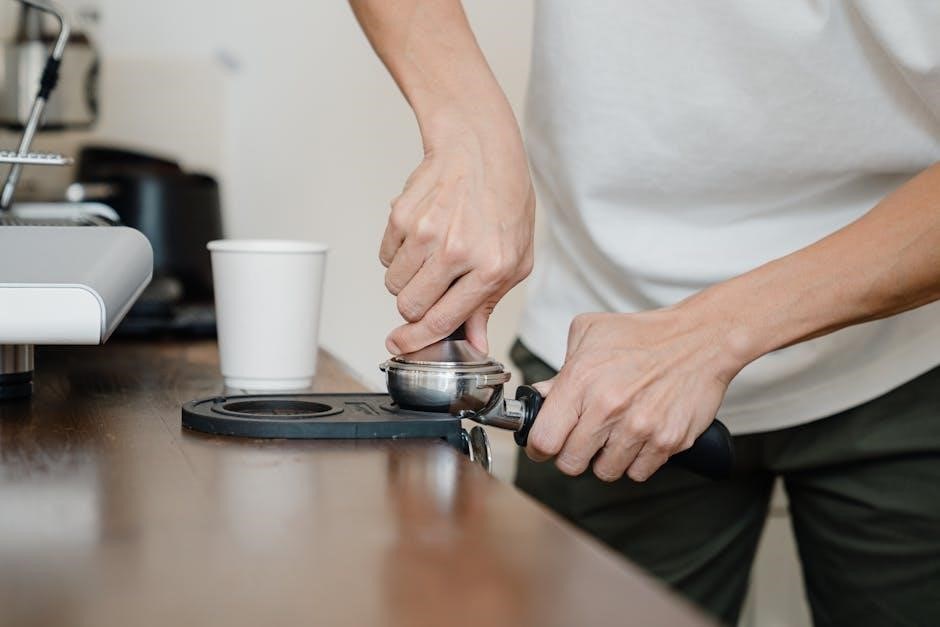
Consistent tamping is crucial for even extraction. After distributing the grounds evenly in the portafilter, use a tamper to compress them firmly. Apply approximately 30 pounds of pressure – a firm, level press is more important than sheer force.
Ensure the tamp is perfectly level to avoid channeling, where water finds the path of least resistance through the grounds. Channeling leads to uneven extraction and a subpar espresso. Like precise edits in Photoshop, consistency is key. Polish the tamped grounds with a gentle twist to create a smooth surface. A well-tamped puck will resist water flow for the ideal 25-30 second extraction time.
Locking the Portafilter
Securely locking the portafilter is essential for safe and effective brewing. Once the coffee grounds are tamped, align the portafilter with the group head of your Gevi espresso machine; Gently insert the portafilter and rotate the handle to the right until it’s firmly locked into place.
You should feel resistance when it’s properly secured. Avoid forcing it, as this could damage the machine. A secure lock prevents leaks and maintains the necessary pressure during extraction, much like a precise edit in Photoshop. If the portafilter isn’t locked correctly, water may spray out, or the espresso will brew unevenly. Always double-check the lock before initiating the brewing process.
Steaming Milk: A Detailed Guide

Achieving perfectly steamed milk elevates your espresso drinks. Begin by filling the milk pitcher approximately one-third full with cold milk – whole milk is recommended for optimal texture. Purge the steam wand by briefly opening the valve to release any condensation. Submerge the wand tip just below the surface of the milk and open the steam valve fully;
Introduce air into the milk by slowly lowering the pitcher, creating a swirling vortex. This stretches the milk, creating microfoam. Once the milk volume increases by about 50%, submerge the wand deeper to heat the milk without adding more air. Aim for a temperature of 140-155°F (60-68°C). Like precise Photoshop edits, practice makes perfect!
Cleaning and Maintenance
Regular cleaning ensures longevity and optimal performance of your Gevi espresso machine. After each use, wipe down the exterior with a damp cloth. Remove the portafilter and rinse thoroughly, discarding used coffee grounds. The drip tray should be emptied and cleaned daily to prevent buildup, much like clearing cache in Photoshop for smoother operation.
Weekly, backflush the machine with water to remove coffee oils. Monthly, descale the machine using a descaling solution, following the manufacturer’s instructions. This removes mineral deposits that can affect brewing quality. Neglecting maintenance can lead to issues, mirroring the problems of outdated software. Consistent care guarantees years of delicious espresso!
Daily Cleaning Procedures

Consistent daily cleaning is crucial for maintaining your Gevi espresso machine’s performance and hygiene. Immediately after each use, empty the drip tray and wipe it clean – preventing residue buildup is key. Rinse the portafilter thoroughly under warm water, removing all traces of coffee grounds. Wipe down the steam wand with a damp cloth after each milk frothing session, purging it briefly to eliminate milk residue.
The exterior of the machine should also be wiped down with a soft, damp cloth. This prevents staining and keeps your Gevi looking its best. These simple steps, like regular file saving in Photoshop, ensure a smooth and enjoyable experience every time you brew!
Descaling the Machine
Regular descaling is vital to remove mineral buildup that can affect your Gevi espresso machine’s performance and the taste of your coffee. Frequency depends on water hardness – typically every 1-3 months. Use a descaling solution specifically designed for espresso machines, following the product’s instructions carefully.
Generally, this involves running the solution through the machine’s brewing cycle, followed by several cycles with fresh water to rinse thoroughly. Like updating Photoshop CS6, descaling keeps your machine running optimally. Ignoring this step can lead to reduced water flow, increased brewing time, and ultimately, machine failure. A clean machine equals a perfect espresso!
Troubleshooting Common Issues
Encountering problems with your Gevi espresso machine? This section addresses frequent concerns. If the machine won’t turn on, check the power cord and outlet. Low water pressure often indicates mineral buildup – descaling is recommended. For espresso brewing issues, ensure proper grind size, tamping pressure, and portafilter locking.
Similar to troubleshooting Photoshop CS6 updates, a systematic approach is key. Erratic steam wands may require cleaning. If problems persist, consult the FAQ or contact support. Remember, consistent maintenance, like regular cleaning, prevents many issues. Don’t hesitate to seek assistance – a perfectly brewed espresso is within reach!
Machine Not Turning On
Is your Gevi espresso machine failing to power up? First, verify the power cord is securely connected to both the machine and a functioning electrical outlet. Test the outlet with another device to confirm it’s providing power. Inspect the power cord itself for any visible damage, such as cuts or fraying.

If the outlet and cord are fine, the issue might be internal. Similar to troubleshooting software like Adobe Photoshop CS6, a reset can sometimes help. Unplug the machine, wait a few minutes, and then plug it back in. If it still doesn’t turn on, contact Gevi support for further assistance – do not attempt to disassemble the machine yourself.
Low Water Pressure
Experiencing weak water flow during brewing? Several factors can contribute to low water pressure in your Gevi espresso machine. Ensure the water reservoir is filled to the appropriate level and properly seated. Check for any kinks or obstructions in the water line connecting the reservoir to the machine.
Mineral buildup, similar to issues requiring updates in programs like Adobe Photoshop CS6, can restrict water flow. Descale your machine regularly, following the instructions in the ‘Descaling the Machine’ section. If the problem persists, verify the portafilter is securely locked into the group head. Contact Gevi support if these steps don’t resolve the issue.
Espresso Not Brewing Properly
Is your espresso weak, watery, or not extracting at all? Several issues could be at play. First, confirm your coffee grind is appropriate – too coarse, and water rushes through; too fine, and it can cause blockage, much like editing complexities in Photoshop. Ensure proper tamping pressure is applied, creating a consistent puck.
Verify the portafilter is securely locked into the group head. Check for clogs in the portafilter basket or shower screen. Regularly clean these components. If the machine has been idle, prime the pump by running a blank shot (water only) through the portafilter. Like troubleshooting CS6 downloads, systematic checks are key. If problems continue, consult the troubleshooting section or contact Gevi support.
Advanced Features and Settings
Unlock the full potential of your Gevi espresso machine with its advanced capabilities! Explore customizable settings to fine-tune your brewing experience. Adjust the brewing temperature to optimize extraction for different coffee bean varieties, similar to tailoring edits in Photoshop. Experiment with pre-infusion times to enhance flavor development.
Many Gevi models offer programmable shot volumes, allowing you to consistently brew single or double espressos. Delve into the machine’s memory functions to save your preferred settings for quick recall. Understanding these features, like mastering CS6 direct downloads, requires exploration. Refer to the control panel section for detailed instructions on accessing and modifying these advanced settings for truly personalized espresso.
Understanding the Control Panel
The Gevi espresso machine’s control panel is your command center for crafting the perfect cup. Familiarize yourself with the power button, indicator lights, and programmable function buttons; The panel displays crucial information, such as brewing temperature and shot timer, enabling precise control, much like Photoshop’s interface.
Explore the steam wand control, allowing you to activate and regulate steam pressure for milk frothing. Understand the function of any dedicated buttons for pre-infusion or adjustable brewing strength. Refer to the manual for specific button layouts and functionalities, as they may vary between Gevi models. Mastering the control panel, similar to CS6 direct downloads, unlocks the machine’s full potential for consistent, high-quality espresso.
Adjusting Grind Size for Optimal Extraction
Achieving optimal espresso extraction hinges on precise grind size adjustment. A grind that’s too coarse results in under-extraction – a weak, sour shot. Conversely, a grind too fine leads to over-extraction, producing a bitter, burnt taste. Like tailoring edits in Photoshop, finding the sweet spot is crucial.
Start with a medium grind and adjust incrementally. Finer adjustments are needed for darker roasts, while lighter roasts benefit from a coarser setting. Observe the espresso flow; it should resemble warm honey. If it flows too quickly, grind finer. If it drips slowly or not at all, grind coarser. Experimentation, similar to exploring CS6 features, is key to unlocking your Gevi’s full potential and consistently brewing exceptional espresso.
Milk Frothing Techniques
Mastering milk frothing transforms your espresso into café-quality beverages. Begin with cold milk – whole milk generally produces the richest foam, but alternatives work too. Purge the steam wand briefly to remove condensation. Submerge the wand tip just below the milk surface and introduce air, creating a swirling vortex. This stretches the milk, increasing its volume.
Once the desired volume is reached, lower the wand deeper to create a smooth, velvety texture, akin to the precise edits possible in Photoshop. Avoid overheating; aim for a temperature around 140-155°F (60-68°C). Tap the pitcher to eliminate large bubbles and swirl to integrate the foam. Practice, like learning CS6 shortcuts, will refine your technique and enable beautiful latte art!
Creating Latte Art
Elevate your beverages with stunning latte art! Begin with well-frothed milk – microfoam is key, resembling the detailed adjustments within Adobe Photoshop. Gently swirl the pitcher to ensure a homogenous texture. Hold the pitcher close to the espresso, and start pouring from a height to combine milk and coffee.
As the cup fills, lower the pitcher and begin creating your design. For a heart, pour steadily then wiggle the pitcher as you finish, pulling through the center. Rosettes require a more complex pouring motion, similar to mastering CS6’s layers. Practice is crucial; don’t be discouraged by initial attempts! Experiment with different techniques and milk textures to unlock your artistic potential, mirroring the creative freedom Photoshop offers.

Safety Precautions
Prioritize safety during operation! Always ensure the machine is placed on a stable, level surface; Never operate with a damaged cord or plug – similar to avoiding corrupted files in Photoshop. Keep the machine away from water sources and flammable materials. The steam wand and espresso outlet become extremely hot during use; avoid direct contact to prevent burns.
Never disassemble the machine while it’s plugged in. Allow all components to cool completely before cleaning, mirroring safe software shutdown procedures. Do not immerse the machine in water. Supervise children when the machine is in use. Regularly inspect the machine for any signs of damage. Following these precautions ensures a safe and enjoyable espresso experience, just as careful editing ensures a polished final project.

Warranty Information
Your Gevi espresso machine is covered by a one-year limited warranty against defects in materials and workmanship from the date of original purchase. This warranty doesn’t cover damage resulting from misuse, accidents, unauthorized repairs, or normal wear and tear – akin to software issues caused by improper use; To initiate a warranty claim, please retain your proof of purchase and contact Gevi customer support.
The warranty covers repair or replacement of defective parts, at Gevi’s discretion. Shipping costs for warranty service are the responsibility of the customer. This warranty is non-transferable. Gevi does not warrant performance issues resulting from improper cleaning or descaling. Refer to the full warranty details included with your machine or available on our website for complete terms and conditions, ensuring a seamless experience.
Frequently Asked Questions (FAQ)
Q: My machine isn’t turning on. What should I do? Ensure the power cord is securely connected and the outlet is functioning. Check the machine’s internal fuse if applicable. Q: Why is my espresso brewing slowly? This could indicate insufficient coffee grounds, too coarse a grind, or inadequate tamping pressure. Adjust these factors for optimal extraction. Q: Can I use pre-ground coffee? Yes, but freshly ground beans are recommended for the best flavor.
Q: How often should I descale the machine? Descale every 1-3 months, depending on water hardness. Q: Is the portafilter compatible with other brands? Generally, no. Gevi portafilters are designed specifically for our machines. Q: Where can I find replacement parts? Visit our website or contact customer support for available parts and accessories, ensuring continued enjoyment.
Gevi Espresso Machine Accessories
Enhance your Gevi experience with our range of dedicated accessories! We offer a variety of portafilter baskets – single and double – to suit your brewing preferences. Consider a distribution tool for even coffee puck preparation, leading to more consistent extractions. A dedicated tamping mat protects your countertop and provides a stable surface.
For milk-based drinks, explore our stainless steel milk frothing pitchers in various sizes. Cleaning brushes are essential for maintaining hygiene, alongside our specialized descaling solution. While some users find included accessories basic, Gevi continually strives to improve quality. Explore our website for bundled accessory kits offering excellent value and convenience, maximizing your machine’s potential.
Comparing Gevi Models
Gevi offers a diverse lineup of espresso machines to cater to varying needs and budgets. The Café Affetto, for example, is an automatic model prioritizing convenience, while others require more manual control. Consider the pump pressure – higher pressure generally equates to better extraction. Water reservoir capacity is another key differentiator, impacting brewing frequency before refills.
Features like built-in grinders and milk frothing capabilities also distinguish models. Some Gevi machines boast advanced control panels with customizable settings. Researching specific model specifications is crucial. The proliferation of coffee gadgets means careful comparison is vital. Ultimately, the best Gevi machine depends on your experience level, desired features, and preferred brewing style.
Where to Find Additional Support
Beyond this manual, Gevi provides multiple avenues for support. The official Gevi website hosts a comprehensive FAQ section addressing common issues and troubleshooting steps. You can also access downloadable resources, including updated manuals and software drivers, if applicable. For direct assistance, Gevi offers customer service via email and potentially phone support – check their website for current contact details.
Online communities and forums dedicated to espresso machines can be invaluable resources. These platforms allow you to connect with other Gevi users, share experiences, and seek advice. Remember to utilize Softonic for software updates. While Adobe Photoshop CS6 isn’t directly related, the principle of seeking reliable downloads applies. Prioritize official channels for accurate information and assistance;