
Key Stage 2 Guided Reading: A Comprehensive Plan
Key Stage 2 guided reading fosters crucial literacy skills‚ enabling students to deeply comprehend texts and actively engage with diverse materials. This plan details strategies for effective implementation.
What is Guided Reading at Key Stage 2?
Guided reading at Key Stage 2 is a cornerstone of literacy instruction‚ representing a small group reading experience where a teacher skillfully supports students as they develop reading strategies. Unlike independent reading‚ or round robin approaches‚ guided reading focuses on targeted skill development within a carefully selected text.
It’s a dynamic process; the teacher provides prompts‚ asks insightful questions‚ and models effective reading behaviours – inferencing‚ predicting‚ clarifying‚ and questioning – to help students construct meaning. These sessions aren’t about simply decoding words‚ but about fostering a deep understanding of the text’s nuances.
The groups are flexible‚ based on students’ reading levels and specific needs‚ ensuring appropriate challenge and support. Through guided reading‚ children learn to become active‚ independent readers capable of tackling increasingly complex texts with confidence and comprehension.
The Importance of Guided Reading in KS2
Guided reading is paramount in KS2 as it bridges the gap between learning to read and reading to learn. It’s during these focused sessions that children truly develop the critical thinking skills necessary for academic success across all subjects. Beyond decoding‚ guided reading cultivates comprehension‚ vocabulary acquisition‚ and a genuine love for literature.
Effective guided reading empowers students to become active participants in their learning‚ fostering independence and self-monitoring skills. It allows teachers to address individual needs within a small group setting‚ providing targeted support and scaffolding.
Furthermore‚ it builds confidence in reluctant readers and challenges more proficient ones‚ ensuring all students progress at their own pace. Ultimately‚ strong guided reading instruction equips KS2 pupils with the foundational skills needed to navigate complex texts and succeed in their future academic endeavors.
Key Skills Developed Through Guided Reading
Guided reading in KS2 meticulously develops a spectrum of essential skills. Core to this is enhanced comprehension – moving beyond simply reading words to understanding meaning‚ inferring‚ and interpreting authorial intent. Simultaneously‚ students expand their vocabulary‚ encountering new words within context and learning strategies for deciphering unfamiliar terms.
Critical thinking flourishes as children analyze text‚ evaluate evidence‚ and form reasoned judgements. Inferential skills are honed‚ requiring students to ‘read between the lines’ and draw conclusions based on textual clues. Furthermore‚ guided reading strengthens fluency and expression‚ improving reading speed and prosody.
These sessions also nurture discussion and collaboration skills‚ as students share ideas and learn from peers. Ultimately‚ guided reading equips children with the tools to become confident‚ independent‚ and critical readers‚ prepared for academic challenges.
Choosing Appropriate Texts for KS2 Guided Reading
Selecting texts is paramount for successful KS2 guided reading. Texts must align with students’ reading levels‚ ensuring challenge without frustration. A ‘just right’ book fosters engagement and promotes skill development. Consider the text’s complexity – sentence structure‚ vocabulary‚ and thematic depth – to match the group’s capabilities.
Beyond level‚ student interest is crucial. Motivating topics ignite enthusiasm and encourage active participation. Diverse genres – fiction‚ non-fiction‚ poetry‚ playscripts – broaden reading experiences and cater to varied preferences. Exposure to different text types prepares students for various reading demands.
Prioritize texts with rich language‚ opportunities for inference‚ and compelling narratives. Texts should lend themselves to meaningful discussion and skill-focused activities. Regularly assess and adjust text choices based on student progress and evolving needs‚ ensuring continued growth.
Text Selection Criteria: Level and Interest
Determining reading level is fundamental. Utilize established reading schemes and assessment data to gauge students’ independent and instructional reading levels. Texts at the instructional level offer a suitable challenge‚ requiring support but allowing for successful decoding and comprehension. Avoid texts that are too easy or too difficult‚ as these can hinder progress.
However‚ level alone isn’t sufficient. Student interest dramatically impacts engagement. A high-interest text‚ even slightly above level‚ can motivate students to persevere and stretch their abilities. Consider students’ hobbies‚ passions‚ and cultural backgrounds when selecting materials.
Look for texts with relatable characters‚ intriguing plots‚ and themes that resonate with students’ experiences. Regularly solicit student input to discover their preferences and build a classroom library that reflects their diverse interests. Balancing level and interest is key to fostering a love of reading.
Text Types Suitable for KS2 Guided Reading
Variety is crucial for developing well-rounded reading skills. Fiction texts‚ including novels‚ short stories‚ and poetry‚ cultivate imagination and emotional intelligence. Explore different genres like adventure‚ mystery‚ historical fiction‚ and fantasy to broaden students’ literary horizons.
Non-fiction texts are equally important. Include informational reports‚ biographies‚ persuasive articles‚ and explanations of scientific concepts. These texts build knowledge‚ develop critical thinking skills‚ and expose students to different writing styles.

Don’t overlook visual texts like picture books (even at KS2!)‚ comics‚ and graphic novels. These formats can engage reluctant readers and support comprehension through visual cues. Incorporate texts with diverse structures‚ such as playscripts and instructions‚ to prepare students for various real-world reading demands.
Planning a Guided Reading Session: A Step-by-Step Guide
Effective sessions require careful planning. First‚ select a text appropriate for the group’s reading level and interests. Next‚ identify a specific focus skill – perhaps inference‚ vocabulary‚ or summarizing. Prepare targeted questions to prompt discussion and assess understanding.
Then‚ plan the session structure: a brief introduction to activate prior knowledge‚ independent reading (using strategies like Round Robin or Echo Reading)‚ a focused discussion guided by your questions‚ and a concluding activity to reinforce learning.

Consider differentiation; have extension activities for stronger readers and support materials for those who need it. Allocate sufficient time for each stage‚ ensuring a balanced session; A well-structured plan maximizes engagement and learning outcomes for all students.
Before Reading: Activating Prior Knowledge
Activating prior knowledge is crucial for comprehension. Begin by discussing the book’s cover and title‚ prompting predictions about the story. Ask open-ended questions related to the text’s theme or setting – “What do you already know about carnivals?” or “Have you ever experienced a delayed flight?”
Brainstorming key vocabulary words beforehand can also be beneficial. Connect the text to students’ personal experiences‚ fostering engagement. Utilize visual aids‚ like pictures or maps‚ to build context. This stage prepares students’ minds‚ making them receptive to new information.
Briefly discuss any relevant background information‚ ensuring all students have a foundational understanding. A strong start enhances comprehension and encourages active participation throughout the reading session.
During Reading: Strategies for Active Engagement
Active engagement is paramount during guided reading. Techniques like Round Robin Reading‚ where students take turns reading aloud‚ can build fluency‚ but should be balanced with other methods. Echo Reading‚ where the teacher reads a sentence and students repeat it‚ supports pronunciation and phrasing.

Choral Reading‚ with the group reading simultaneously‚ fosters a sense of community and boosts confidence. Encourage students to visualize the story‚ make connections‚ and ask clarifying questions. Pause strategically to discuss key events or challenging vocabulary.
Model effective reading strategies‚ such as making inferences and monitoring comprehension. Prompt students to summarize sections and predict what might happen next. These techniques transform reading from a passive activity into an interactive learning experience.
Round Robin Reading
Round Robin Reading involves each student taking turns reading a section of text aloud to the group. While seemingly straightforward‚ its effectiveness in Key Stage 2 guided reading requires careful consideration. It can enhance fluency and pronunciation‚ particularly for struggling readers‚ as they receive immediate peer modeling.

However‚ it’s crucial to mitigate potential drawbacks. Anxious readers may feel pressured‚ hindering comprehension. To address this‚ pre-reading practice or assigning sections based on reading level can be beneficial. Teachers should model fluent reading beforehand and provide supportive feedback.
Effective implementation involves brief sections‚ frequent pauses for discussion‚ and a focus on comprehension rather than simply decoding. It’s best used as one strategy within a broader guided reading session‚ not the sole method.
Echo Reading
Echo Reading is a powerful technique within Key Stage 2 guided reading‚ particularly beneficial for developing fluency and prosody. The teacher reads a short phrase or sentence with expression‚ and students immediately “echo” it back‚ attempting to replicate the intonation and pacing. This builds confidence and models fluent reading.
It’s especially effective for challenging texts or for students who struggle with expression. By mimicking the teacher’s reading‚ they internalize correct pronunciation and phrasing. The teacher can deliberately model different emotions or reading speeds to highlight the impact of prosody on meaning.
To maximize impact‚ keep phrases concise and provide positive reinforcement. Encourage students to focus on matching the teacher’s expression‚ not just reading the words correctly. Echo reading should be a supportive and encouraging activity‚ fostering a risk-free environment for practice.
Choral Reading
Choral Reading‚ a valuable strategy in Key Stage 2 guided reading‚ involves the entire group reading aloud simultaneously with the teacher. This technique promotes fluency‚ builds confidence‚ and enhances pronunciation skills. It’s particularly useful for tackling challenging texts or passages with unfamiliar vocabulary.
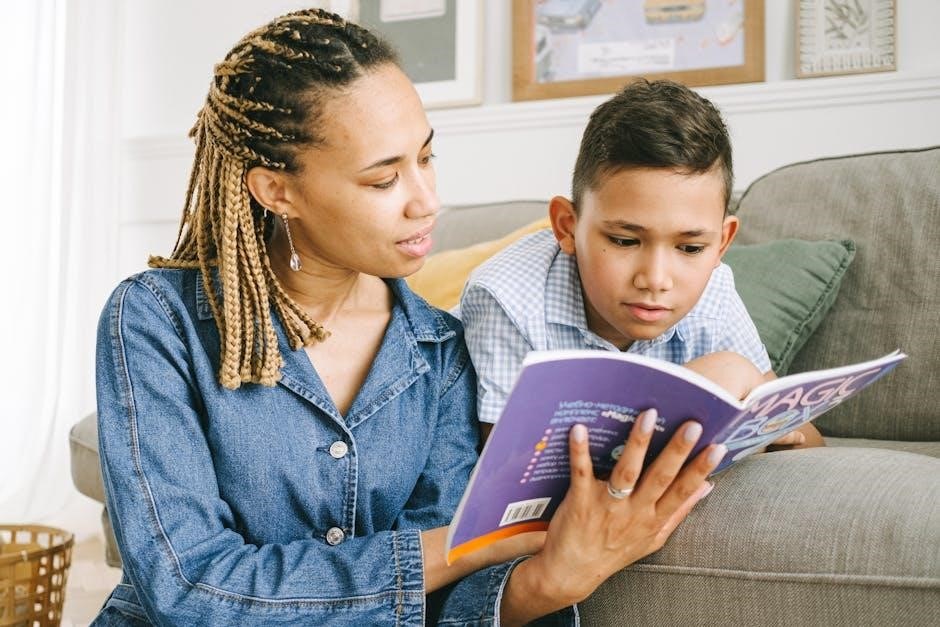
The teacher sets the pace and expression‚ and students follow along‚ aiming to synchronize their reading. It’s not about individual performance‚ but collective participation. This reduces anxiety for struggling readers‚ allowing them to blend in and practice without feeling singled out.
Vary the choral reading – sometimes whisper‚ sometimes read with enthusiasm‚ sometimes focus on specific punctuation. This reinforces the importance of expression and encourages active listening. Ensure all students have a copy of the text to follow along effectively‚ maximizing engagement and learning.
During Reading: Focusing on Specific Skills
During reading sessions in Key Stage 2‚ shift the focus beyond simply decoding words. Targeted skill development is crucial. Teachers should strategically select skills – such as identifying the main idea‚ understanding character motivations‚ or recognizing different text structures – and guide students to apply them.
This involves posing specific questions that prompt deeper thinking. For example‚ “Why did the character make that choice?” or “How does the author use descriptive language to create a particular mood?” Encourage students to support their answers with evidence from the text.
Mini-lessons integrated during reading can address specific challenges. Modeling effective strategies – like highlighting key information or making predictions – empowers students to become independent‚ skilled readers. Regular practice solidifies these skills and builds confidence.
Vocabulary Development in Guided Reading
Vocabulary enrichment is a cornerstone of effective Key Stage 2 guided reading. Don’t simply ask for definitions; instead‚ focus on contextual understanding. Before encountering new words‚ encourage predictions based on surrounding text. During reading‚ prompt students to discuss how a word’s meaning contributes to the overall passage.
Explicitly teach strategies for deciphering unknown words – using prefixes‚ suffixes‚ root words‚ and context clues. Keep a ‘vocabulary notebook’ where students record new words‚ their meanings in context‚ and example sentences.
Games and activities‚ like word sorts or creating semantic maps‚ can make vocabulary learning engaging. Regularly revisit previously learned vocabulary in new contexts to reinforce retention. A rich vocabulary directly impacts comprehension and overall literacy success.
Inferential Skills and Guided Reading
Inferential skills – reading between the lines – are vital for Key Stage 2 comprehension. Guided reading provides the perfect setting to nurture these abilities. Move beyond literal ‘right there’ questions and pose prompts requiring students to draw conclusions based on textual evidence.
Encourage students to explain how they arrived at their inferences. Prompts like “What makes you say that?” or “What clues in the text support your idea?” are crucial. Model inferential thinking aloud yourself‚ demonstrating the process of combining text clues with prior knowledge.
Focus on character motivations‚ predicting events‚ and understanding implied meanings. Discuss ‘reading with your head and your heart’ – considering both the facts and the author’s intent. Strong inferential skills unlock deeper understanding and critical thinking.
Questioning Techniques for Effective Guided Reading
Effective questioning is the cornerstone of successful Key Stage 2 guided reading sessions. Move beyond simple recall questions; prioritize those that stimulate higher-order thinking. Bloom’s Taxonomy provides a useful framework – aiming for analysis‚ evaluation‚ and creation.
Employ a mix of question types: open-ended (encouraging detailed responses)‚ closed (checking specific understanding)‚ and inferential (requiring ‘reading between the lines’). “Why do you think the character acted that way?” is far more valuable than “What did the character do?”
Facilitate discussion‚ encouraging students to respond to each other’s ideas. Use ‘think-pair-share’ to build confidence. Don’t immediately provide answers; allow students time to grapple with the text and formulate their own interpretations. Strategic questioning unlocks deeper comprehension.
Differentiation in Guided Reading
Effective differentiation is paramount in Key Stage 2 guided reading‚ acknowledging the diverse learning needs within a classroom. This isn’t simply about providing easier texts; it’s about tailoring support and challenge.
Grouping Strategies should be flexible and responsive to assessment data. Consider ability‚ reading speed‚ and specific skill focus. Mixed-ability groups can foster peer support‚ while targeted groups address specific weaknesses.
Adjusting Text Complexity involves more than just reading level. Offer texts with varying sentence structures‚ vocabulary‚ and thematic complexity. Provide pre-teaching of key vocabulary or sentence stems to support struggling readers. Challenge advanced learners with extension tasks‚ such as writing alternative endings or analyzing authorial intent.
Grouping Strategies
Strategic grouping is central to successful Key Stage 2 guided reading‚ allowing targeted instruction. Several approaches prove effective‚ each with unique benefits.
Ability Grouping‚ while sometimes criticized‚ can be useful for focused skill development. Ensure groups are fluid and regularly reassessed to prevent stagnation. Flexible Grouping‚ based on specific needs (e.g.‚ inference skills)‚ allows for dynamic adjustments.
Mixed-Ability Groups promote peer tutoring and collaborative learning‚ fostering a supportive environment. Carefully consider dynamics to ensure all voices are heard. Teacher-Directed Groups involve the teacher directly working with a small group needing intensive support. Regularly rotate group compositions to expose students to diverse perspectives and learning styles‚ maximizing engagement and progress.
Adjusting Text Complexity
Text complexity is paramount in Key Stage 2 guided reading; appropriately challenging texts maximize learning. Several strategies facilitate adjustments to suit diverse reading levels.
Lexile Levels provide a quantifiable measure of text difficulty‚ aiding selection. However‚ consider qualitative factors – theme‚ structure‚ and vocabulary – alongside quantitative data. Scaffolding techniques‚ like pre-teaching vocabulary or providing sentence starters‚ can support access to more complex texts.
Chunking longer texts into smaller‚ manageable sections reduces cognitive load. Offering simplified versions of texts‚ while maintaining core content‚ can be beneficial. Remember to balance challenge with support‚ ensuring students experience success and build confidence. Regularly assess comprehension to inform future text selections and adjustments‚ fostering continuous growth.
Assessment in Guided Reading
Assessment within Key Stage 2 guided reading isn’t solely about formal testing; it’s an ongoing process informing instruction. Formative assessment‚ through observation and questioning‚ provides real-time insights into student understanding.
Monitor reading strategies – inferencing‚ summarizing‚ vocabulary acquisition – during sessions. Running records offer detailed analysis of decoding skills and fluency. Comprehension questions‚ both literal and inferential‚ gauge understanding. Encourage students to self-assess their learning and identify areas for improvement.

Summative assessments‚ like short quizzes or written responses‚ can evaluate overall progress. Maintain detailed records of individual student performance to track growth and tailor future guided reading groups. Assessment should be a supportive tool‚ guiding instruction and celebrating achievement.
Record Keeping and Progress Monitoring
Consistent record keeping is vital for effective Key Stage 2 guided reading. Maintain individual student profiles documenting reading levels‚ strengths‚ and areas needing support. Utilize anecdotal notes during sessions to capture specific observations about strategies used and challenges encountered.
Employ a system for tracking skills – inference‚ vocabulary‚ fluency – over time. Running record data provides quantifiable evidence of decoding progress. Regularly review these records to inform group placements and instructional focus.
Progress monitoring allows for timely intervention. Identify students who are falling behind and adjust support accordingly. Share progress updates with parents‚ fostering a collaborative approach to reading development. Detailed records demonstrate student growth and justify instructional decisions.
Resources for KS2 Guided Reading
Diverse resources are essential for engaging Key Stage 2 guided reading sessions. Schools should invest in a well-stocked library with fiction‚ non-fiction‚ and poetry at varying reading levels. Consider leveled reading schemes to support differentiated instruction and ensure appropriate challenge.
Supplementary materials like graphic organizers‚ question stems‚ and vocabulary lists enhance comprehension. Utilize high-quality texts aligned with curriculum topics to create cross-curricular links. Access to a range of text types – stories‚ reports‚ explanations – broadens reading experiences.
Online resources offer interactive texts and comprehension activities. Explore educational websites and digital libraries for supplementary materials. Remember to carefully evaluate online content for suitability and accuracy. A blend of traditional and digital resources maximizes learning opportunities.
Online Resources and Tools
Numerous online platforms support Key Stage 2 guided reading‚ offering interactive texts and comprehension activities. Websites like Oxford Owl and Reading Eggs provide leveled books and progress tracking features‚ catering to diverse reading abilities. These platforms often include built-in assessment tools to monitor student understanding.
Digital libraries‚ such as Epic!‚ grant access to a vast collection of ebooks‚ fostering independent reading and providing materials for guided sessions. Interactive whiteboards and educational apps can enhance engagement during group discussions. Utilize online dictionaries and thesauruses to support vocabulary development.
Careful evaluation of online resources is crucial; ensure content aligns with curriculum objectives and is age-appropriate. Explore free resources alongside subscription-based options to maximize budget efficiency. Remember to prioritize websites with strong security measures and data privacy policies.
Creating a Positive Guided Reading Environment
A supportive atmosphere is paramount for successful Key Stage 2 guided reading. Establish a comfortable and inviting space‚ free from distractions‚ where students feel safe to take risks and share their ideas. Encourage active listening and respectful dialogue among group members.
Foster a growth mindset‚ emphasizing effort and progress over perfection. Celebrate successes‚ both big and small‚ and provide constructive feedback. Model enthusiastic reading behaviors and demonstrate a genuine love for literature. Create a sense of community where students value each other’s contributions.
Regularly rotate roles within the group – such as predictor‚ summarizer‚ or questioner – to promote engagement and responsibility. Ensure all students have opportunities to participate and feel valued. A positive environment builds confidence and encourages a lifelong love of reading;
Common Challenges in KS2 Guided Reading and Solutions
A frequent challenge is maintaining engagement amongst all students‚ particularly those who struggle with decoding or comprehension. Solutions include carefully selected‚ high-interest texts at appropriate reading levels‚ and differentiated questioning techniques. Another hurdle is managing varying reading speeds within a group; employing strategies like ‘echo reading’ or ‘round robin’ can help.

Addressing a lack of participation requires creating a safe space where students feel comfortable sharing‚ even if unsure. Pre-teaching vocabulary and activating prior knowledge can boost confidence. Difficulty with inferential skills is common; explicitly teaching strategies like ‘reading between the lines’ is vital.
Time constraints can be overcome with focused session planning and clear learning objectives. Consistent assessment and responsive teaching are key to addressing individual needs and maximizing progress.
Parental Involvement in Supporting Guided Reading
Engaging parents significantly enhances a child’s guided reading progress. Schools can host workshops explaining the process and providing practical strategies for home support. Encouraging parents to read aloud with their children‚ even beyond Key Stage 2‚ fosters a love of reading and models fluent reading.
Simple activities like discussing the text‚ asking open-ended questions about characters and plot‚ and helping children re-tell the story strengthen comprehension. Parents can also support vocabulary development by discussing unfamiliar words encountered in reading materials.

Regular communication between teachers and parents is crucial. Sharing reading logs or providing a list of recommended books aligned with the child’s reading level empowers parents to actively participate. Creating a home reading environment‚ free from distractions‚ is also beneficial.
The Role of the Teacher in Guided Reading
The teacher’s role in Key Stage 2 guided reading is multifaceted and pivotal. It extends beyond simply monitoring reading; teachers are facilitators‚ coaches‚ and assessors. Careful observation during reading sessions allows for targeted intervention and support‚ addressing individual student needs.
Effective teachers skillfully select appropriate texts‚ plan engaging sessions‚ and pose thoughtful questions that promote deeper understanding. They model reading strategies‚ such as making predictions and clarifying confusion‚ empowering students to become independent readers.
Differentiation is key; teachers must adapt sessions to cater to varying reading levels within the group. Providing scaffolding‚ offering alternative texts‚ and adjusting questioning techniques ensures all students are challenged and supported. Consistent record-keeping and progress monitoring inform future planning and instruction.
Future Trends in Guided Reading at Key Stage 2
Emerging trends in Key Stage 2 guided reading emphasize personalized learning and technology integration. Expect increased use of digital texts and interactive platforms‚ offering features like built-in dictionaries and comprehension quizzes. Data-driven instruction‚ utilizing assessment tools to pinpoint skill gaps‚ will become more prevalent.
A shift towards student agency is anticipated‚ with children taking greater ownership of their reading choices and learning goals. Collaborative reading experiences‚ leveraging peer support and discussion‚ will gain prominence. Focus will expand beyond decoding and comprehension to include critical thinking and evaluating sources.
Furthermore‚ a growing emphasis on diverse and inclusive texts will ensure representation and broaden students’ perspectives. Teachers will increasingly adopt flexible grouping models‚ responding to real-time needs and fostering a love of reading for all.